


Real quick before we start: if you haven’t already, I would love if you could take a few minutes to fill out the GQN feedback survey to help me plan for next year!
Hey, folks. I know there’s a lot of fear and uncertainty these days about what’s going to happen and what’s already happening with gender affirming care, I don’t know what’s gonna happen in the short term. But here’s what I DO know:
One, trans people will always exist. We have existed for centuries. And two, while this access to care is indeed life changing and life giving, health care is not what gives us permission to exist. Health care is not what defines our validity. Healthcare is one tool in a toolbox of many to help our lives feel worth living.
For today’s article, I think it’s important for us to spend some time reflecting on what else is in that toolbox.
This is not accepting defeat, or telling us we need to learn to live without gender affirming care. This is a moment to root ourselves into the resilience and radicalism and beauty of our queer ancestors.
I think it’s also good to give a really gentle nudge here that almost all of these forms of gender affirmation are also things enjoyed by cisgender people. Gender affirming care is an amazing tool to help us build a home in our bodies and nearly every person does not have access to a body that feels perfect. Body image concerns are being constantly worsened by social media use and the million bajillion Ozempic commercials (the even got Serena freaking williams!!! devastating) and healing our relationships to our bodies is a part of affirming gender that shouldn’t be undercut.
So what else is in our toolbox?
Clothing and Style!
Style inspo! Find people with a similar build to you to act as “style inspirations”. Rather than just focusing on “what should someone of this gender look like?” remember that different clothes are built for different bodies. There are broad shouldered, tall women. There are short men. There are women with long limbs and there are men with wide hips and there are very few body types that are truly unique to one biological sex regardless of what modern media might lead you to believe.
Clothing swaps! Don’t have the ability to go out and buy a whole new wardrobe? Me neither! We can also look into Queer and trans clothing swaps where folks are able to bring clothes that no longer fit or affirm them and trade them out for others. Is there one coming up in your neighborhood or metropolitan area? If not, these can be relatively easy to organize as a one-off event. Even if you think you wouldn’t do it perfectly, remember our motto: perfect is the enemy of done.
Shapewear! Shapewear is the umbrella term for garments and tools to help your body take on a different shape. Chest binders, tucking underwear, TransTape, packers, prosthetics and can help us find a more affirming silhouette. A reminder also that plenty of cis people aren’t thrilled with their own silhouettes, which is why we have push up bras and booty lifter leggings and t shirts fit to make your muscles look bigger or those shirts with abs printed on them. Shapewear is magic!
Hair! I cannot stress enough what an amazing tool hair and hairstyling is for gender affirmation. If you need help finding an affirming barbershop or salon, look no further than Strands for Trans, an amazing database of welcoming spots around the world to get your hair done. All my allies in the house, encourage your hair salon to sign up, too!
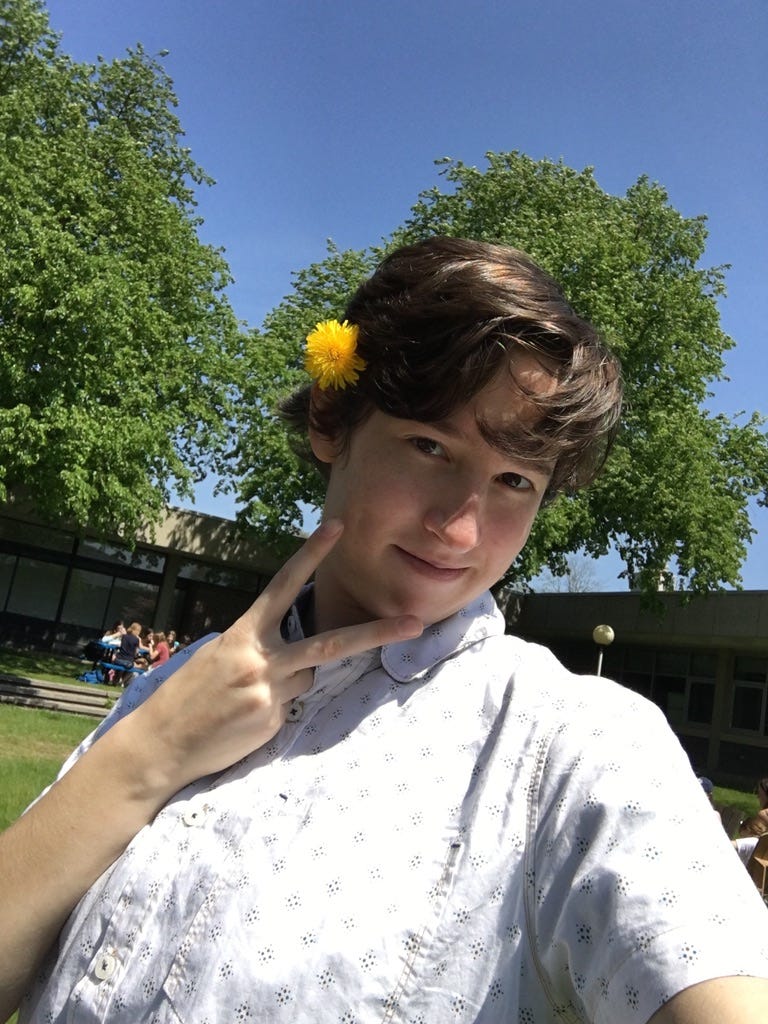
Makeup! If you’ve ever seen a drag queen or a drag queen king, you likely understand the shape shifting powers of these magical materials for masculinizing, feminizing, or androgynizing your face. Though drag performers are often doing their makeup in a way that’s over the top—intentionally so by nature of the art form—there’s also so many incredible ways that are much more subtle to do makeup for work or a social gathering or even just for feeling seen at home.
What about someone who’s closeted?
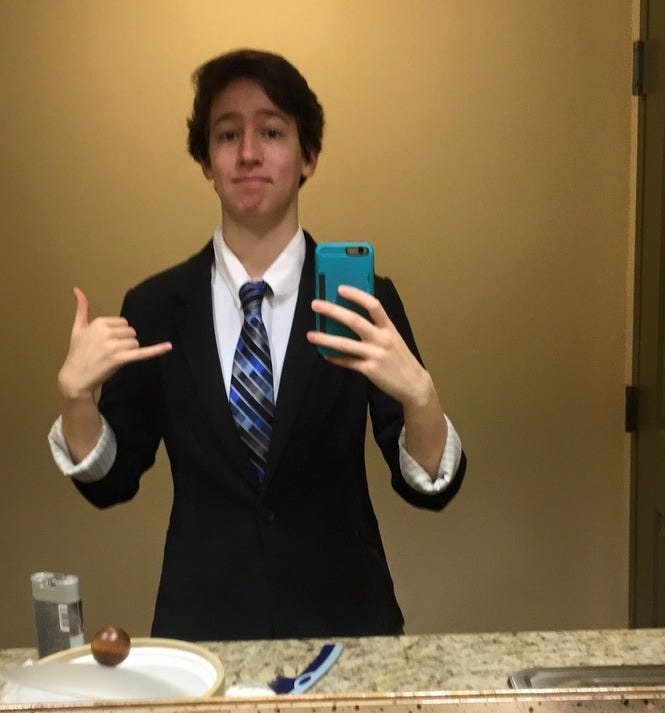
Create micro-welcoming spaces! In the beginning of my transition, I had almost no spaces where I could go and truly let my guard down. I was not out to my family or to most of my friends or to people at school. So most of the time, I was disappearing into the costume of the girl people saw me as. But my girlfriend at the time had told her mom (with my permission), and even if she might not have understood exactly what I was going through, she wanted to support me. When I came over to their family’s house for Friday night pizza dinners, they would all wear their most comfortable clothes and I would be found in a button down and a binder and a tie. They called me “Mr. Greene”. In those moments, I was truly and completely Ben. I was completely safe. Even if it was once a week or less, knowing there was somewhere I could be completely seen really and truly got me through that era of my life.
Maybe you take your friend or your loved one to a nail salon that’s a little extra far away, or you construct a fake nail salon in your house to give them the experience before they’re ready to go out in public. Maybe you close the blinds and put on the handsomest suits or the most stunning dresses you can find and you have a fancy dinner completely as yourselves. Maybe you keep a little box in your closet of affirming clothes just for them that they can wear when they come over.
If your trans kid can’t be out at school, consider a “transformation ritual” they can go through every time they get home to put on an outfit that makes them feel seen.
Expand opportunities to play! While some of the rules of gender and identity are a bit more socially rigid, there are certain opportunities we can build a little extra freedom. Maybe play a Dungeons and Dragons campaign where your friend can roleplay as their actual identity. Hang out with little kids and play dress up or nail painting. Play!
Look to the web! If we cannot find spaces where we feel seen, we can try to build them. Maybe it’s online communities, like discords, or support groups. Or a weekly social call to play board games or catch up with a group of queer friends that live in different places. Where can you feel seen?
Exercise!
Strength training! Yeah. This is a big one. It took me a while to be willing to exercise, to be blunt. I had a lot of hesitations. I was lazy, yes, but to tell the truth, I was also ashamed to associate myself with anything too “masculine” because part of me was still viewing masculinity as something inherently kind of evil.
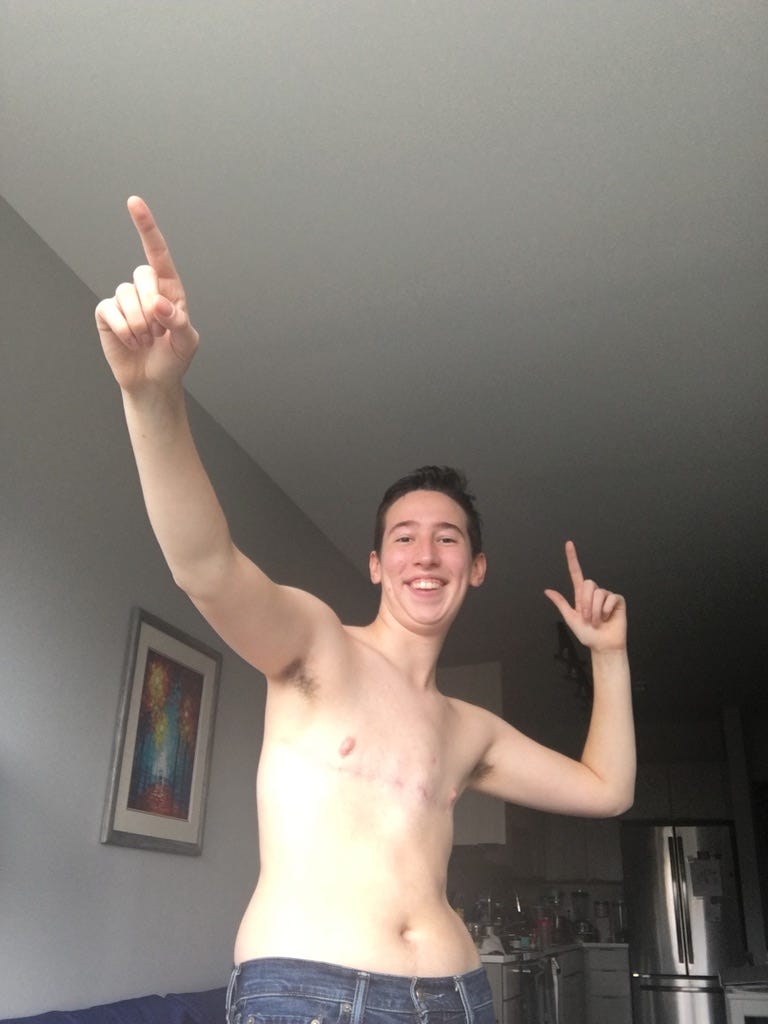
But as I started to spend more time working out with my wife, building more reliable routines and getting form guidance from my younger sister, I started to work through that relationship in a lot of ways that made a really major difference for me.
What was miraculous to me was learning about the in-depth world of trans fitness coaches online. By choosing to emphasize certain forms of exercise, certain types of strength training, there is a significant amount that you can do to build your body into a shape that’s more affirming. Since I started working out, for example, my shoulders pop like hell in a way that I’m really excited about and affirmed by.
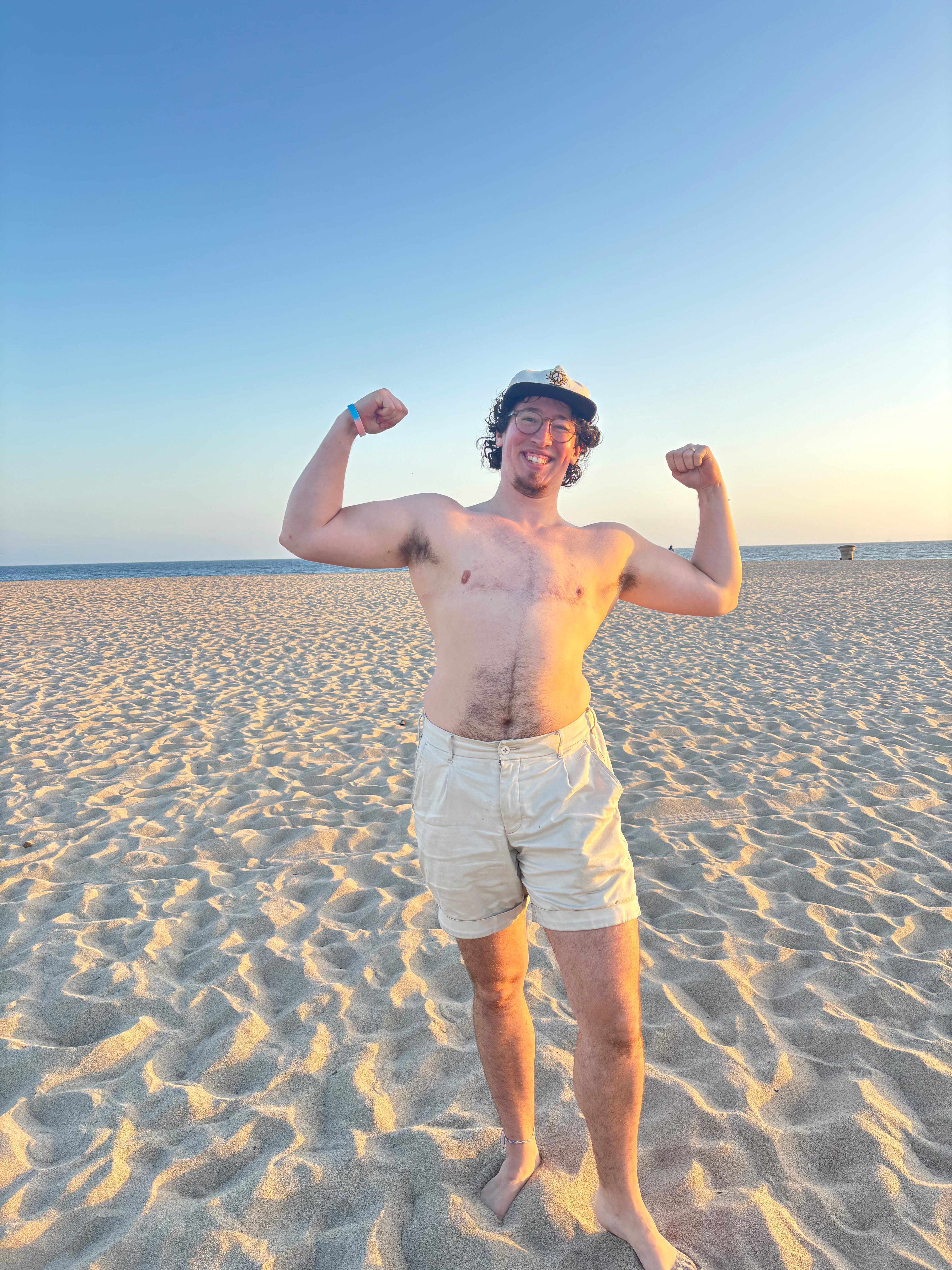
I don’t care if you’re going to the gym. I don’t care if you’re running. The specifics don’t matter to me at all. Making a regular habit of moving your body is amazing for thousands of reasons for pretty much every type of person. Aerial silks, a queer softball league, watching a trans personal trainer on youtube, yoga, long walks, dancing, anything!
Voice Training! While HRT or puberty blockers are sometimes the easiest way to change the sound of your voice, there are also so many things you can do with breath, pitch, and tone to alter your sound in a way that’s affirming. I actually have a longer article coming out about voice training in a week or two, but here’s a resource that’s a great place to start: https://www.undeadvoice.com/
Expanding the Gender Box
Rethink gendered rituals! Shaving facial hair is one of the most conventionally gendered rituals I can think of. Even if, for the record, many cisgender women grow facial hair and just are forced to pretend they don’t. Before my testosterone kicked in, I found myself feeling quite sad that I didn’t have a beard. So what did I do? I shaved. Did that make my beard grow in faster? No. But what’s the result of shaving? I don’t have a beard. I created an alternative logical pathway in my brain: I have a routine of shaving, and this is why I do not have a beard.
Conversely, perhaps you are a cis woman, and you have a trans woman in your life. Consider implementing a new “girl time” ritual in which you do a variety of fun self-care and skincare tasks. Including shaving, both of you. It doesn’t matter whether or not you actually have a beard. You can shave too, and nothing bad will happen. By turning it into a larger ritual that you share together and marking it specifically as a girl time ritual, you take away the isolating or gendered association with the activity.
Get pronouns right!!!!!!!!!!!!! One of the biggest reasons I wanted top surgery was because I felt no one would ever see/respect/love me as a man until my body looked more masculine. I imagine the stakes might not have felt so high if I knew that the people closest to me could see me no matter what, and pronouns are the biggest indication of that.
Don’t impose gender dysphoria! This is a particular reminder for parents and loved ones of folks who came out really young. Young trans kids, including the young adults those kids grow up to become, don’t have the same associations with “girl parts” and “boy parts” that we do. Sometimes kids will express to us that they have dysphoria, but sometimes parents will jump to worrying that even though their kid sees their parts as totally normal, other people might not. But your kid isn’t transitioning for other people—they’re doing it for them. We have to make sure to let them lead the way on this conversation and avoid labeling parts by gender.
Community
Find your people! For so many trans people, it’s a hard time right now. Doing it alone certainly isn’t going to make things any easier! Consider finding other trans people who have gone through similar things. If you’re a trans parent, you could find a support community through Pregnant Together. If you’re going through voice training or interested in learning more about it, you could do that through a community based program with undead voice. You could join a queer book club or a queer mutual aid group or form a support or social group. What matters is finding a community that works for you.
That’s all I’ve got for you all today, but I know these aren’t all the strategies that work for people! My audience is pretty evenly divided between loved ones of trans kids and trans folks themselves, and for my fellow trans folks I think this is a wonderful opportunity for us to pass some hard-learned wisdom down to younger trans generations!
Let us know in the comments: besides medical transitioning, what has brought you the most joy or affirmation in your identity?
THANK YOU FOR THIS <3 i am really far into my transition but i still get dysphoria and this has given me some schemes lollllll
Love these suggestions! I will also add a plug for Renée Yoxon (dot com), the trans vocal coach I worked with! Their courses are online and self paced, so if you get spooked by hearing yourself recorded you can slow way down or take a break if you need to.
I have found the Gender Reveal podcast and the associated Slack community to be a really positive place for sharing day to day questions, struggles, selfies, HRT knowledge share, and all different stages of social and medical transition at all different ages.
And in my personal life, I have found getting my clothes tailored to suit my body has helped SO MUCH with dysphoria.