


Howdy folks! I’m spending the next two weeks recharging and seeing family in the woods of one of my favorite national parks, but I thought I might use this time to edit and reshare a few of my favorite posts I’ve written in the nearly two years (!!!) since Good Queer News began.
This one was so fun to write and look back on. I am a huge nerd, and love the power that speculative fiction has to shape our dreams, futures, fears, and possibilities. This was originally published as a paid subscribers only article, but I’m happy to now share it with everyone! I am still so grateful to all the folks who help sustain this project.
Once I start talking or writing or even just thinking about books, I immediately feel my blood pressure cool. This also applies to the magical companion playlists for many of my favorite science fiction stories. If you want to increase the calming sci fi magic while you read this article, check out the playlist for Monk and Robot, my favorite series of all time.
So, why science fiction?
I tell people that I read all the time, and sometimes they assume that I only read nonfiction because they’re like, “oh, you know a lot about so many things. It must be from all reading nonfiction”. And I do absolutely love a good nonfiction, but the bulk of my reading time is usually spent with what’s called speculative fiction, the combination of science fiction, fantasy, and horror. This talk was about science fiction in particular (don’t worry, there will be a follow up queer fantasy list one of these days), which I absolutely love for a variety of reasons.
People who think science fiction is pure escapism with no connection to our current world make me laugh. It has everything to do with it. At its core, science fiction allows us to take our problems and put them into fictional situations with aliens and spaceships and all this crazy stuff so that we can dream up better solutions without someone immediately saying, well, here’s why that wouldn’t work. No one’s going to debate me on realism when my book is about a bunch of aliens deciding how to take down astro-fascists. It allows us to brainstorm totally radically different ways of being, of relating to each other, and I think that’s awesome. Then once we’re thoroughly inspired, we can start to brainstorm how to bring these big ideas into the real world.
Why the focus on Queer Sci-fi?
I love science fiction, and I love queer science fiction in particular because even when I need an escape from the problems of my day to day life, I don’t need to escape from my transness. My transness isn’t a problem. It’s the rest of the world that I’m trying to leave behind. Now I’m not someone who’s loved queer science fiction my entire life because I’m not someone who’s *known about* queer science fiction my entire life. But in 2020, I was gifted by my family a private browsing session at my local bookstore, Left Bank Books in Saint Louis, and everything changed.
I went in for my browsing appointment, and I looked around for a little while. I had just started getting back into reading and wasn’t sure what would reignite that childhood book devouring that had defined my young life. Nervously, I went to the front desk and said,
“Hey. I know this might be a little weird, and it’s totally fine if not. But I was just curious. Are there any science fiction or fantasy books that have trans protagonists? I don’t even know if that’s a real thing.”
The person there started to laugh, and she grinned and said, “buddy, everyone who works here is trans.” And all of a sudden, two other people come out from the back of the store, and the next thing I know, they’ve shepherded me downstairs to the science fiction and fantasy section. They’ve plopped me down in a chair and are now running around the store collecting all of their favorite queer and trans books for me, and it was magical. There was so much possibility being formed in that moment. They gave me more books than I could possibly afford, and I certainly didn’t buy all of them. But I did buy more than I could afford. Sooo worth it.
They were so absolutely over the moon at the opportunity they had to show me these incredible stories. I went home and immediately read those books, I fell into the arms of Sarah Gailey and Becky Chambers and NK Jemisin, and my brain felt like it was stretching to see whole new galaxies, metaphorically and literally. From there, I was all in on queer science fiction and fantasies.
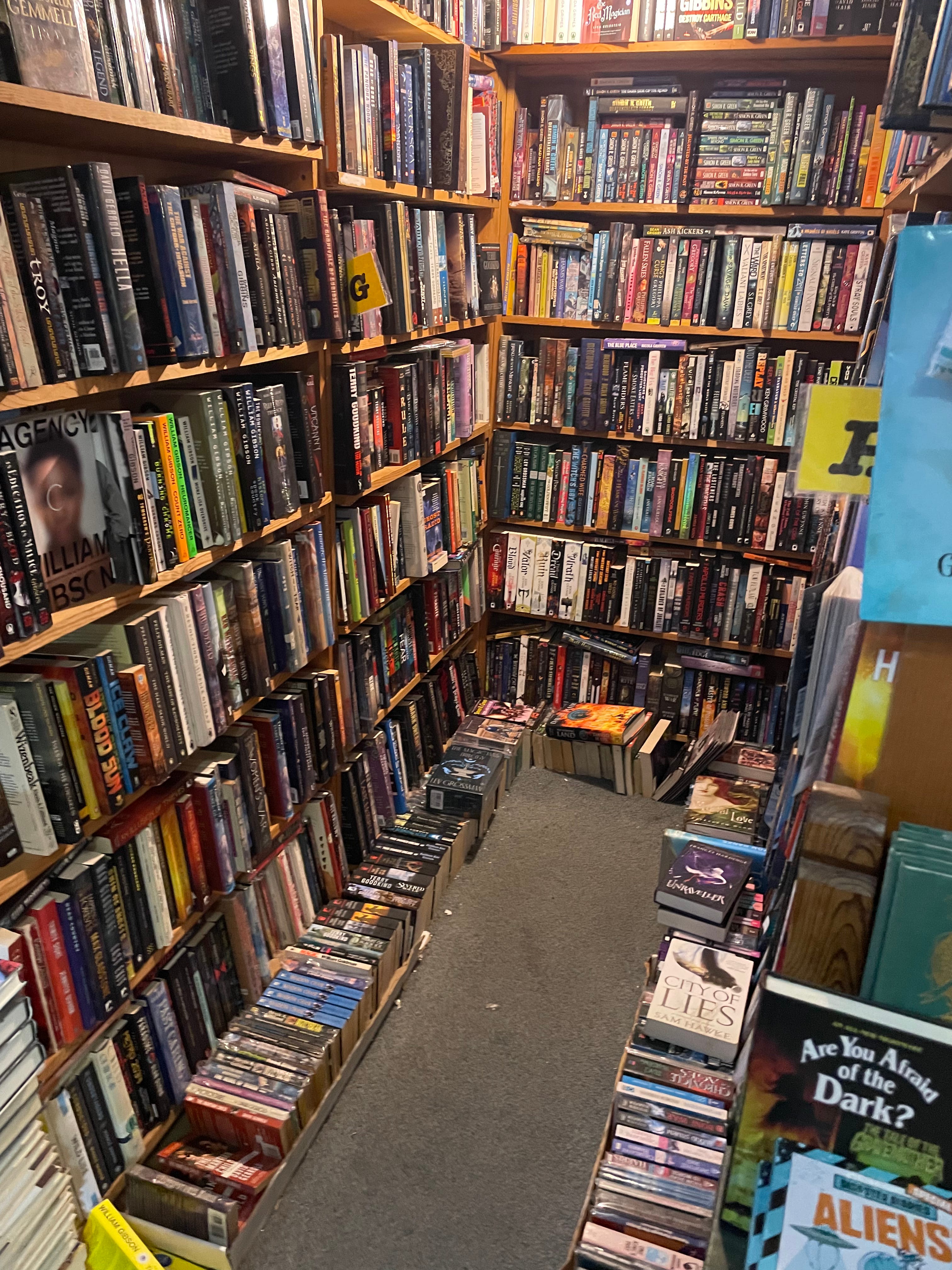
These books and countless others brought me tremendous joy, tremendous peace, tremendous inspiration as a movement leader, and a vision of myself as an author with books that local booksellers can’t wait to hand to someone wondering if there are any stories about people like us.
If you take nothing else away from this article, by the way, I hope you internalize that independent bookstores are a gem, and change and save lives in very real ways, and librarians and booksellers are the closest things we have to superheroes. If you read this newsletter and are a bookseller or librarian, you are basically a celebrity to me. If you want to order any of the books I’m going to recommend in part two of this newsletter, I hope you’ll order them from Left Bank Books in St. Louis or go pick it up from your own neighborhood indie bookstore!
Joyful Imagination!
Octavia Butler, one of my favorite joyfully imaginative revolutionary authors once said: “I never bought into my invisibility as a black person. As a woman and as an African American, I wrote myself into the world. I wrote myself into the present, the future, and the past.” This is exactly what we’re doing with joyful imagination. Science fiction gives us the paintbrush, the paints, and the canvas to envision totally new ways of being and connect these visions to as many people as possible.
Dystopian and Revolution Fiction
One of the most well known categories of science fiction is dystopian and revolution narratives. These stories, in part, gift us with a blueprint for fighting back. They also show us that we can, in fact, survive even when things feel so dramatically fallen apart. These are stories that include a slice of life, or a romance plotline, or a personal dream, someone having hobbies and personality traits. Even when the world falls apart, you still can exist and live while we fight to make things better.
On the flip side to that, dystopian science fiction also gives us an opportunity to show people real fears in a way they’re more likely to engage with. In 2008, if you’d tried to tell people that an overreliance on screens and technology was going to disconnect us and ruin our planet, you’d be laughed out of the room and would reach, at best, a few hundred people. But by releasing WALL-E, which shared the same fears, countless people engaged with and internalized the dystopia that movie represented.
Storytelling gives people a safe container to engage with the “what if”, and makes them so much more likely to explore those possibilities rather than just sitting with the cognitive dissonance of not worrying about what happens we keep using AI to write all our emails.
Here are a few examples of some of my favorite queer dystopian revolution stories.
Dystopian & Revolution Recs
The Fifth Season by NK Jemisin
One sentence pitch: Epic sci fi/fantasy genre-bender about othering, fear, power, family, and the end of the world.
Quote: “I don’t give a shit what the something-somethingth council of big important farts decreed, or how the geomests classify things, or any of that. That we’re not human is just the lie they tell themselves so they don’t have to feel bad about how they treat us.”
An Unkindness of Ghosts by Rivers Solomon
One sentence pitch: The horrors and revolution of the antebellum south set on a massive spaceship.
Quote: “I am a boy and a girl and a witch all wrapped into one very strange, flimsy, indecisive body. Do you think my body couldn’t decide what it wanted to be?”
A Memory Called Empire by Arkady Martine
One sentence pitch: Hardcore imperial space politics, drama, murder, brain sharing, intrigue, revolution.
Quote: “We’re arrested. But—fuck it. Let’s unarrest ourselves.”
This is How you Lose the Time War by Amal El-Mohtar and Max Gladstone
One sentence pitch: Two time-traveling secret agents on opposing sides of a time-bending war between technology and nature leave each other secret notes and fall in love.
Quote: “I want to meet you in every place I ever loved. Listen to me. I am your echo. I would rather break the world than lose you.”
The Dispossessed by Ursula K. Le Guin
One sentence pitch: Brilliant physicist from an anarchist commune planet decides to visit the capitalist society to exchange ideas. Contradiction, connection, and revolution ensue.
Quote: “You cannot buy the revolution. You cannot make the revolution. You can only be the revolution. It is in your spirit or it is nowhere.”
Solarpunk
In addition to “end of the world” types of stories, the genre of solarpunk shows us what a better, more beautiful world could look like. Solarpunk often includes rich pictures of survival, beautiful integrations between technology and nature, and found family. Solarpunk encourages us to imagine something kinder, and to imagine ourselves living within that world.
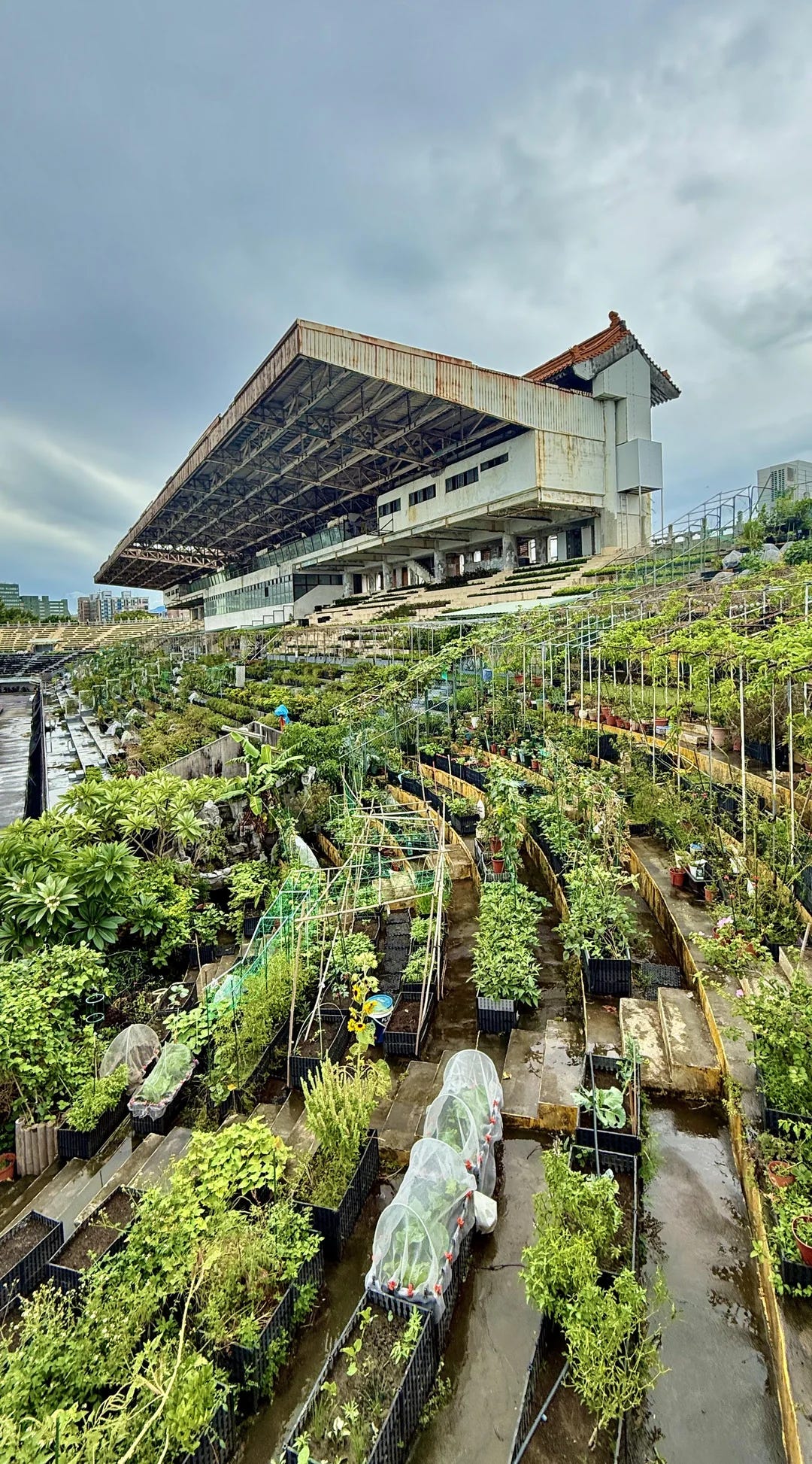
Solarpunk has a real track record of encouraging people to think of new ways to be hopeful, like climate activism book “What if we Get it Right?”, “earthship” houses meant to be totally self contained, or stories of people repurposing old stadiums to become beautiful green spaces.
Solarpunk Recs
The Monk and Robot Duology by Becky Chambers
One sentence pitch: Nonbinary tea monk learns to take a break, while a wild robot joins them to learn what humanity needs.
Quote: “No matter what, I’m wonderful.”
Upright Women Wanted by Sarah Gailey
One sentence pitch: Revolutionary wild-west librarians cross the country to distribute banned books
Quote: “Fight the State. Be a Librarian.”
Light from Uncommon Stars by Ryka Aioki
One sentence pitch: Young trans violinist makes a deal with the devil in exchange for violin lessons and a safe place to live. Found family, romance, and donuts ensure.
Quote: “With no need for a beginning, nor any reason to end, the music continues. And so, no matter who you are, where you came from, what sins you have committed or hurt you have endured... when you are alone and there is no universe left to remember you. You can always, always rewrite your song”
It’s also worth noting that while most of the things we do in our regular lives don’t feel solar punk because they feel normal given that they are part of our real, day to day lives, it’s actually extremely cool that electric cars are becoming so common. It’s amazing that we have solar and wind and water powered energy and that these energies are beginning to surpass coal, oil, and gas.
Your community garden where you gather every week for potlucks and organizing meetings and you share food systems and you use technology to help you plan the right foods to plant and when based on our ability to predict the weather for a YEAR? that’s solar punk! Building resilient communities outside of the state is solarpunk as hell!!!
What other books do you think everyone needs to read in the joyful imagination category? Give us your best one sentence pitch or a favorite quote! I’m optimistic that this comment section is going to break my TBR.
The End… For now
Rest assured that you will continue to hear lots more of my thoughts on books, sci fi, and all things nerdy joy. For now, I’ve already spent more hours than I care to admit researching this, staring longingly at my bookshelf, and reconnect with old friends (also books), and I need to get back to work!
This article was originally published here on November 10th, 2025 and was edited for clarity and quality (lol).
I LOVE this. I’m ALLLLLLL for queer books! :) In the off chance you don’t know about this site, here you go! They have a sister site Queer Romance Ink that focuses on romance too, where you can browse by sexuality and pairing. It is owned by a queer married couple and one of them (Scott) writes Sci Fi. https://www.queerscifi.com/
Ok who is smarter than me and can make this into a booklist shopping cart on some small minority owned bookstore's website? I want them all (and am apparently lazy)!
Also LOVE NK Jemison and all their books!