


Though technically the Good Queer News audience is made up of LGBTQ+ folks and allies looking for hope, there is a second gigantic circle inside of this Venn diagram: nerds.
It is a continuous delight to me, as a nerd myself, that I get to use this platform to speak not only about the news and the reasons to be hopeful that you all signed up for but also about the books and other art that are allowing my hope to continue to persist.
Also quick sub-note. For anyone currently impacted by social media’s latest wave of INTENSE fearmongering, please please check out this wonderful article by Dr. Sebastian Barr.

Ok Back to Books!!
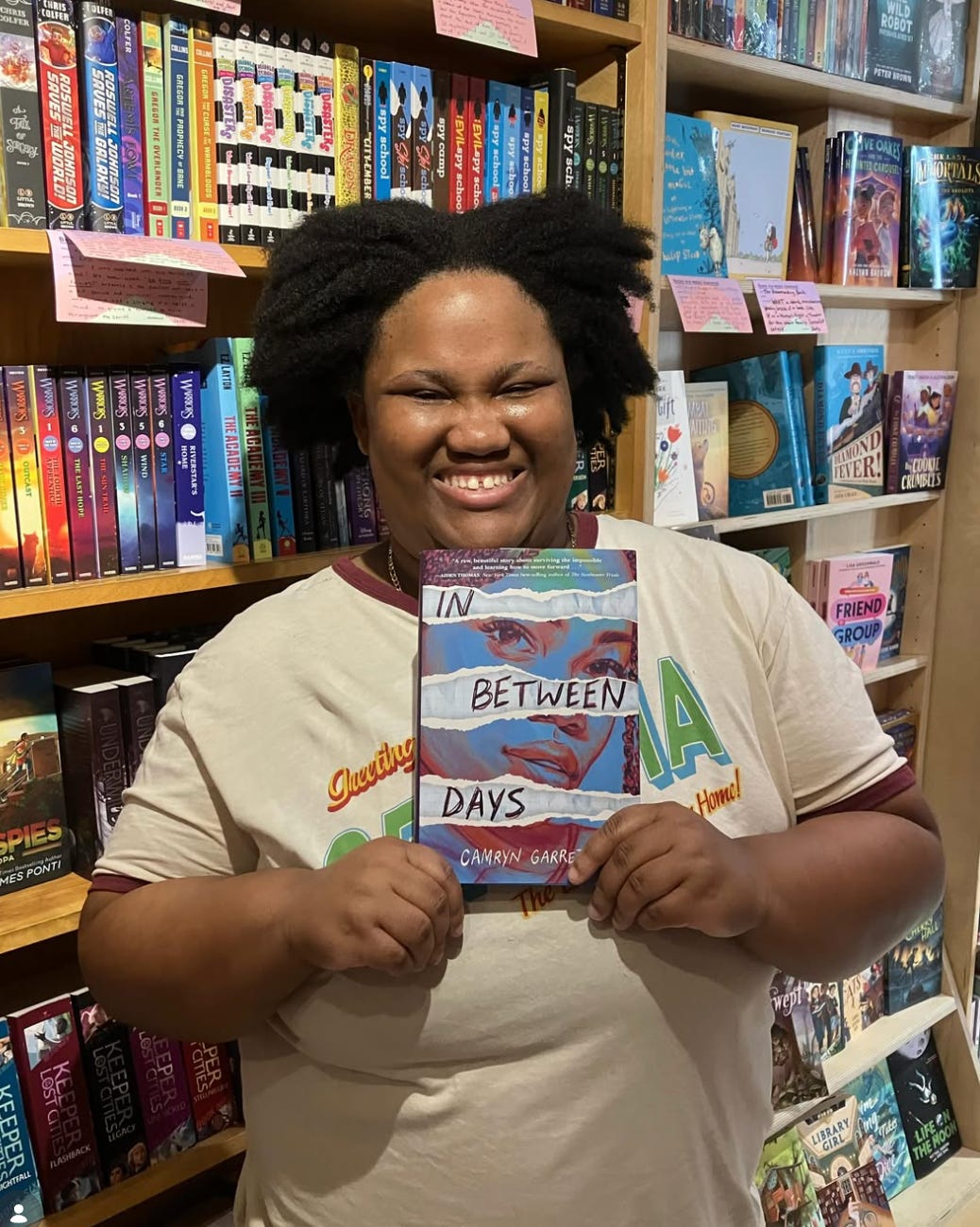
Last month I was generously sent an advanced copy of Camryn Garrett’s new book, In Between Days which was pitched to me as follows:
“In Between Days is a YA novel that navigates the intersection of queerness, grief, and families. In this moving and culturally relevant new story, Camryn has captured this emotional journey through the perspective of a young teen who discovers her father’s queerness after his death and has to navigate her family’s grief alongside her experience of self-discovery.”
It was a hardcore, immediate yes, and I read the book in one sitting (aided by my many hours of travel during my trip to Lithuania, but also by the fact that I could not. stop. reading.)
This book was so beautifully written, so perfectly balanced. One of the things I’m most deeply impressed by is when an author trusts their readers to read, to think, and to feel without being spoon-fed. Camryn so wonderfully trusts her readers to walk through difficult situations and feelings. At the same time, this is the most fun grief book I’ve ever read. It wasn’t intentionally depressing without shying away from the painful isolation of grief. That is not an easy line to walk! I could go on and on about how much I loved this book, but it would be even more fun to invite Camryn in to GQN for an interview!!
Let’s Get Into it!
Ben: Camryn!!! Beautiful cover. Beautiful book. I literally read the whole thing in one sitting. Oh, wow. It was so good. How did you decide that this was the book you wanted to write?
Camryn Garrett: I actually wrote this first as a screenplay in one of my classes, and I basically was like, I don’t know what to do with the screenplay, let me make this into a book! And it was really about wishing that I had a community in ways that I’m kind of building now, but I didn’t really know how to start finding it at the time.
My first book was about a girl with HIV. She has two dads. She lives in San Francisco. And when I was researching this, I was learning so much about the AIDS crisis, about older queer people, and I was like, I really don’t have connections to older queer people in my family or outside of my family.
So this new book is about a girl who becomes friends with her dad’s boyfriend that she didn’t know existed. Obviously, there’s a lot of grief. There’s a lot of sadness. But I was like, I really do sometimes wish that I had an older gay to tell me “this is how you do it.”
I think especially at that time, I was really like, I don’t know how I identify. I really am not sure. I feel like I’m doing things wrong and I really want someone to be like, this is how you do it. This is how you be gay.
Ben: Richard’s character is just so cute. And Vera is so classic Gen Alpha that she’s like, “how do you be gay?” And he’s like, “Here’s an idea of an answer.” And she’s like, “ew. You’re embarrassing.” Iconic.
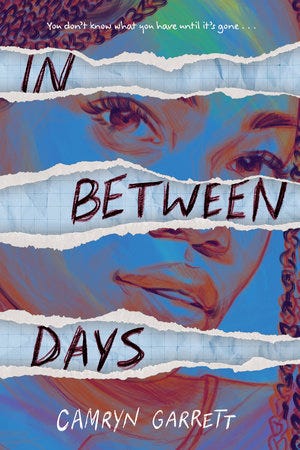
Ben: One of the things that I found really, really beautiful about this book is that it’s shaped by grief, but sometimes you read a book that is sad and heavy and just stays in that sad place the whole time. I was really, really impressed that I was reading this book smiling most of the time. I’m laughing. It’s hilarious. Tell me about how you walked that line.
Camryn Garrett: Yeah. That makes me really, really happy to hear because that was definitely the goal. I lost my father, oh my gosh, almost seven years ago now. I was like, I don’t feel like I’ve seen grief represented the specific way I’ve experienced it. I was like Mira, and I was making random jokes and sort of laughing at the ridiculousness of these situations. And it was really difficult for me to engage with my peers about it.
Camryn: When I wrote the book, one of my professors was 80. I would talk to him a lot because he said “I understand what it’s like to lose parents. And a lot of your peers don’t understand, and they won’t for a really long time.” And so that sort of ties back into the idea of multigenerational community and being able to connect to people who are older than me about these things that maybe my peers or people my age don’t really understand.
I know it’s very cliche to be like, oh, hang out with older people and you’ll learn. But I do think we can find a lot that we can share. Richard lived through the AIDS crisis. He’s lived through all sorts of things. He has this sort of understanding that maybe Mira doesn’t, that her friends at the bookstore don’t, and her friends at school don’t. And that can be really validating.
Ben: Yeah. And I think you show that relationship in a way that’s really realistic. Here’s what it looks like to put effort into that relationship. Here’s appropriate boundaries. Sometimes it’s gonna be awkward, and that’s okay.
Camryn Garrett: And that’s something that a lot of young people don’t necessarily process that if it’s awkward, it can still be okay.
Ben: Oh, I really love that!!
Ben: Okay. Here’s another question. One of the things I think a lot about for myself as a writer and when I read other people’s work is that, like, at least for me, I write in part to heal myself.
I write something I need to figure out, something that is hurting, something that I need to make meaning of, etcetera. Was there something that was healed for you by writing this book?
Camryn: That’s a really good question. I think I really wanted to write not just about the grief, but also about this fear that you’re doing it wrong. That there’s a wrong way to be queer, which there isn’t.
Especially when I was, like, 20, I used to have this very intense anxiety about how I identified. For a long time I identified as bisexual. And then in college I started wondering if I was a lesbian? I had to pick one. And everyone was kind of like, who cares? It was really funny because it tormented me. It was all I thought about.
The online queer spaces I was in, it felt like if you don’t fit specifically into certain ways of expressing this identity, then you’re not as valid or you’re not a “real gay”. And my friends were like, just touch grass. It’s okay.
There’s confidence there now, and this assuredness that the way I exist is fine. I think writing this book and writing Mira and having that hindsight where it’s sort of like, it doesn’t matter. It’s okay. You find community and you find your own way of expressing what queerness looks like to you and that was healing for me.
Ben: Oh, I love that, and I think that came across in the book really well, you know, especially with this journey that she was on of, like, how do I relate to people as someone who has a dead dad? And it wasn’t that, oh, actually, they can all understand. You didn’t try to tie it up with a fake bow and “we’re all gonna get it and understand each other perfectly by the end.”
Ben: There are a lot of readers and a lot of people who dream about writing or about telling their stories, but who feel like there isn’t a place for my story. What would you say to somebody who’s wanting to write something, who’s wanting to tell a story, and feels like there’s not a place for it?
Camryn: Please do!!! I think we all fall into that feeling of: if my story isn’t commercial or if I don’t think people would wanna read my story, it’s not worth telling. And I think you do yourself a disservice with that. The most important question is, is the story important to you? Would you wanna read the story? Because with everything I write, that’s the first question I ask myself.
If I’m writing for young adults, I ask: would teen-me want to read this story? When I wrote my middle grade book, would 12 year old me wanna write read this? And if the answer is yes, then I owe it to myself to write it. Just the journey of writing your story and taking it seriously is a really beautiful gift that you can give yourself, because it’s so cathartic. It’s so therapeutic for me anyway. There’s so much joy in it.
Ben: Yeah. Oh, I love that. And that too really divorces the storytelling and writing from publishing. Publishing is hell. Publishing is hard, and it’s so much about luck and finding the right person at the right time. But you could tell the story.
Camryn: You could. I just saw an author who writes queer romance, and she just sold a book that she said she wrote ten years ago. So even if you write a book now or it isn’t a book and you just write your story now and you don’t know what to do with it, hold on to it because you never know what you could do with it.
Ben: Okay. I have another question for you that I’m really excited to hear your thoughts on. I am very much of the belief that we use books to write our way into the future. We figure out what we want. We figure out how to get there. We make other people wanna get there with us. Butler, Brown, Jemisin, Le Guin, like, all those. So many authors have taught us what it looks like to write our way into the future.
As a writer, what future are you writing towards? What are you most excited about? What do you dream about individually, collectively? What are you hoping that your writing will push us towards?
Camryn: It’s a really good question. Oh, man. I really try to write my books so they feel sort of like a safe space specifically for black queer teens. And I think I’m writing towards a future where those safe spaces are bigger, that they’re more accessible.
Because I feel like it’s very trite to say “our stories are important”. I think we all know that. For me, it’s writing towards a future where there’s enough space for nuance, like, space for everyone to be who they are and be different and still be in the same community and still be supporting each other.
I’m writing toward a future where we have more intergenerational community, community across lines that we might think are really hard to cross.
Ben: Oh, that’s lovely. And I do feel like that tenderness and that safety really comes through in your writing.
Ben: Time for the last bits, and I’m so sad this interview has to end, but where can people find you??
Website to learn about all Camryn’s wonderful books and art (or to hire her for school visits!):
https://www.camryngarrett.com/
Follow Camryn on Instagram!
https://www.instagram.com/camryngwrites/
Fin
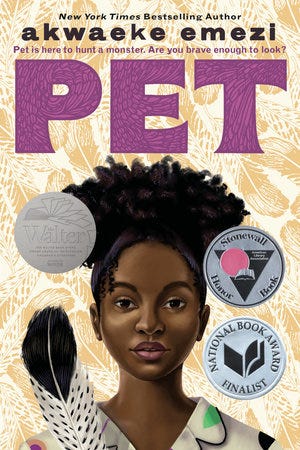
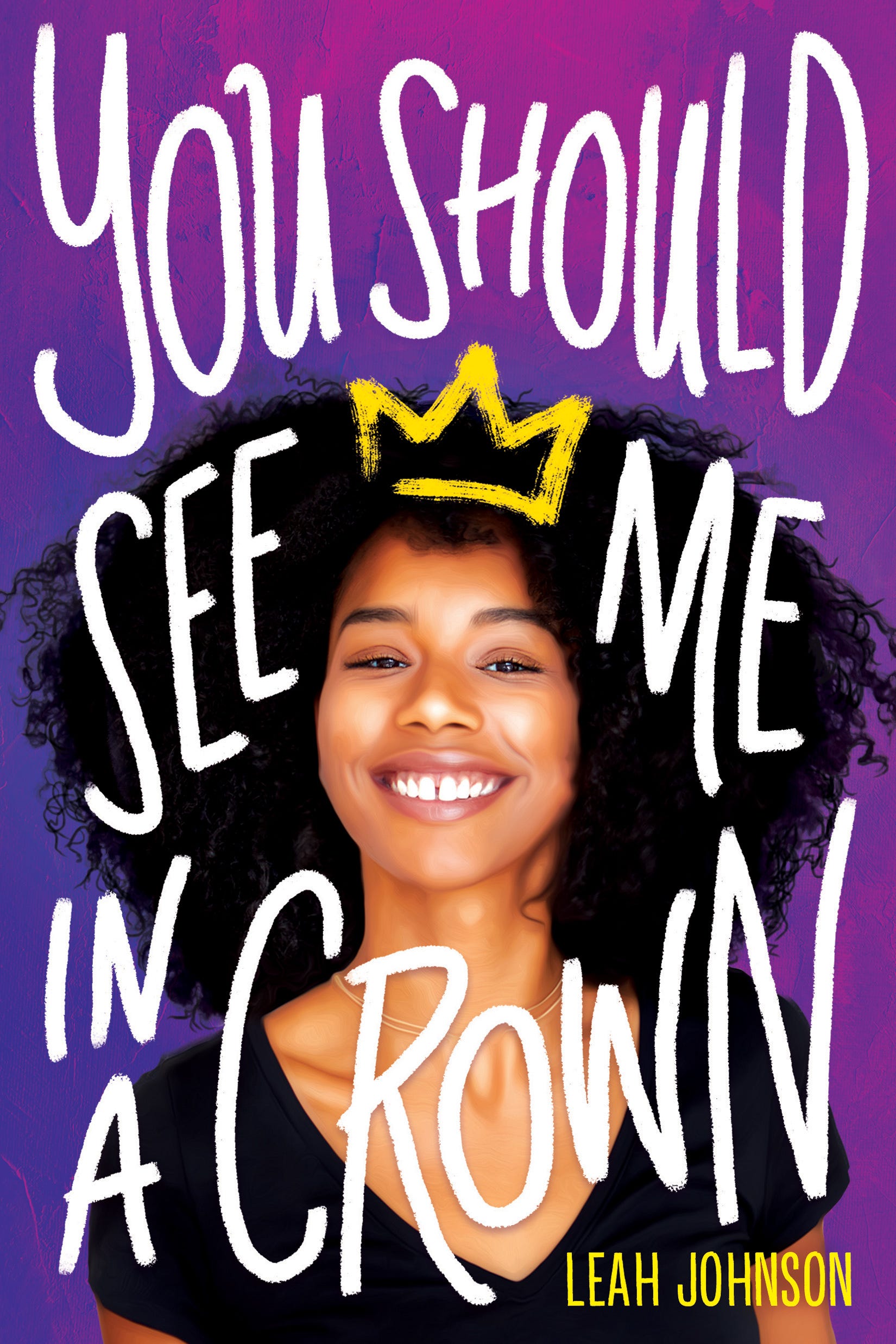
That’s all folks! Get out there and get a copy of In Between Days! As annoying as it is, sales numbers are the metric by which queer, black, nuanced, and any other beautiful and necessary and “diverse” stories are judged. These numbers determine whether publishers are willing to take on our stories in the future, what kinds of advances they give us, how much support they give us with marketing, and whether they judge our stories as “valuable”.
I had a really wonderful time reading this as an adult (and am very picky about which YA books I like) and even if you aren’t a big YA reader:
You can donate a copy to a local PFLAG chapter or a school library!
You can put copies in a little free library in your neighborhood!
You can keep it on your shelf to lend it out at the perfect moment!
It was so fun for me to collect recs for Black Queer YA books in the chat last week, so if you have other recs PLEASE drop them in the comments here!!
That’s all for today! Love you all so much <3
Ben
I appreciate and understand the importance of celebrating the trans community. I suspect, however, that trans folk and their dedicated advocates (or parents💜🏳️⚧️) are not getting emotional about “misinformation” or trolls. I suspect most of us are savvy enough to comprehend the all-too-real policies, subpoenas, rhetoric, actions and violence happening within the community. I’ll read Barr’s piece, but I am less optimistic that it will find the readers who need it most.